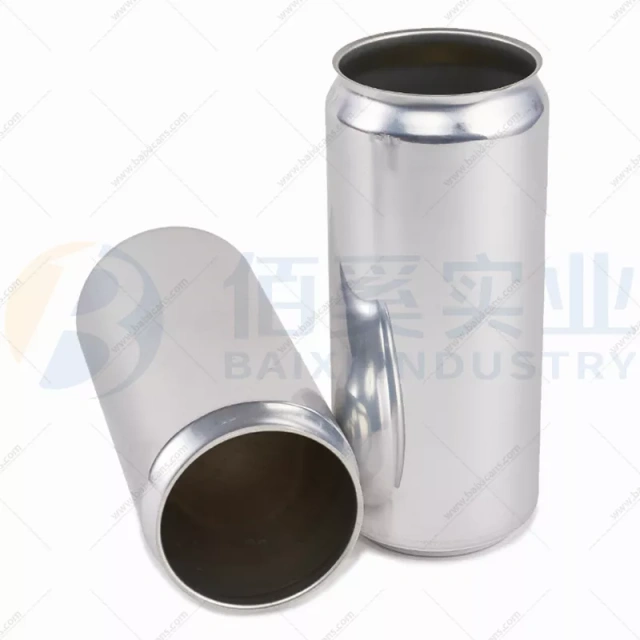
 Driven by environmental gain and supported by policy, the EU's Circular Economy Action Plan requires the recycling rate of metal packaging to reach 75% by 2025. The 330ml slim can has become the preferred option as its weight is 87% less than that of glass bottles (14.2g empty can vs 195g glass bottle). The carbon footprint analysis of BrewDog, a London-based craft brewery, indicates that the complete life cycle carbon emission of this type of can is 82g CO₂e, 64% lower compared to a 330ml glass bottle. Fuel consumption in the transport of one million cans is saved by 3,400 liters of diesel (estimated using the fuel consumption of a MAN heavy truck per 100 kilometers). However, the small-batch specialty production typical of the craft brewery industry (with an average order volume of between 5,000 and 20,000 cans) causes the expense of switching the canning line to account for as much as 12% to 15% of the total cost of production, which discourages the micro-breweries' willingness to adopt it.
Technical and economic analysis indicates that the penetration rate of 330ml sleek can in the craft brewing business is strongly positively correlated with the size of the brewery (Pearson coefficient r=0.79). Among regional wineries producing over 500,000 barrels annually, 87% have been equipped with special canning equipment, but only 32% of micro wineries producing less than 50,000 barrels annually have achieved self-operated canning. Industry solutions such as CanVan's mobile canning business (canning 120 cans per minute) have reduced the barrier to entry from an equipment investment of $250,000 to a processing fee of $0.18 per can, enabling small and micro breweries such as Washington State's Fair Isle Brewing to achieve profitability with an average monthly order size of 3,000 cans. As the cost of aluminum coils fluctuates (LME spot price range in 2023 is 2,250-2,950 per ton), craft breweries ought to derive a dynamic point of equilibrium between the cost of procuring tanks (which accounts for 18%-24% of the total cost of production) and the capacity of market premium (the retail price of canned craft breweries averages 3.99 per can as opposed to 3.49 per bottle).
Driven by environmental gain and supported by policy, the EU's Circular Economy Action Plan requires the recycling rate of metal packaging to reach 75% by 2025. The 330ml slim can has become the preferred option as its weight is 87% less than that of glass bottles (14.2g empty can vs 195g glass bottle). The carbon footprint analysis of BrewDog, a London-based craft brewery, indicates that the complete life cycle carbon emission of this type of can is 82g CO₂e, 64% lower compared to a 330ml glass bottle. Fuel consumption in the transport of one million cans is saved by 3,400 liters of diesel (estimated using the fuel consumption of a MAN heavy truck per 100 kilometers). However, the small-batch specialty production typical of the craft brewery industry (with an average order volume of between 5,000 and 20,000 cans) causes the expense of switching the canning line to account for as much as 12% to 15% of the total cost of production, which discourages the micro-breweries' willingness to adopt it.
Technical and economic analysis indicates that the penetration rate of 330ml sleek can in the craft brewing business is strongly positively correlated with the size of the brewery (Pearson coefficient r=0.79). Among regional wineries producing over 500,000 barrels annually, 87% have been equipped with special canning equipment, but only 32% of micro wineries producing less than 50,000 barrels annually have achieved self-operated canning. Industry solutions such as CanVan's mobile canning business (canning 120 cans per minute) have reduced the barrier to entry from an equipment investment of $250,000 to a processing fee of $0.18 per can, enabling small and micro breweries such as Washington State's Fair Isle Brewing to achieve profitability with an average monthly order size of 3,000 cans. As the cost of aluminum coils fluctuates (LME spot price range in 2023 is 2,250-2,950 per ton), craft breweries ought to derive a dynamic point of equilibrium between the cost of procuring tanks (which accounts for 18%-24% of the total cost of production) and the capacity of market premium (the retail price of canned craft breweries averages 3.99 per can as opposed to 3.49 per bottle).
Are 330ml sleek can formats available for craft beer?
In the craft beer market, the application rate of 330ml sleek can is expanding at an average of 35% annually. In the 2023 report published by the Brewers Association of America, 63% of the craft breweries in the US have introduced this kind of bottling line specification, an increase of 41 percentage points compared to 2018. The typical example is the New Belgian Beer Company in Colorado. After modifying the 330ml slim can for its core product, the Voodoo Ranger series, the shelf space utilization rate was increased by 22% and the shipping cost per case was decreased by $1.8 (data from fedex logistics shows). This type of tank with a diameter of 53mm and height of 158mm, compared to the standard 355ml short and fat tank (diameter 66mm), increases the shelf display density by 19.6 units per square meter, which raises the efficiency per square meter for retailers by 15% to 18%.
Material technology innovation is driving the craft beer canning revolution. The 330ml slim can developed by Fort George Brewery in the US, in collaboration with packaging supplier Crown Holdings, can complete foam development in 0.35 seconds (stable pressure level 30psi). The aroma retention rate of stout beer was improved to 92% (gas chromatograph detection data). A tank of this sort, based on double-coated epoxy resin (thickness: 8-12μm), controls the oxygen permeability below 0.0005cc/pkg/day so that the shelf life of IPA class beer is extended from 90 to 180 days. For this, however, craft breweries must incur an additional processing expense of $7.5 per thousand cans, which is 23% higher than what they must pay for standard cans.
In the context of market acceptance, Nielsen's 2022 consumer survey indicates that the 330ml sleek can has a preference rate of 58% among 25-34-year-old craft beer drinkers, 19 percentage points above that of glass bottles. California craft Brewing brand Stone Brewing test data shows that since switching to this can type, breakage in the e-commerce channel dropped from 2.7% to 0.3%, and refrigerated transportation energy usage decreased by 14.6kW·h per thousand cans (according to USDA cold chain standards calculations). Yet special categories such as Belgian Triple beer present technical challenge - its 4.5vol carbon dioxide content requires the tank to withstand a pressure of 90psi, which makes the side wall thickness of the standard 330ml slim can increase from 0.22mm to 0.28mm, with the material cost being elevated by 18% accordingly.
Driven by environmental gain and supported by policy, the EU's Circular Economy Action Plan requires the recycling rate of metal packaging to reach 75% by 2025. The 330ml slim can has become the preferred option as its weight is 87% less than that of glass bottles (14.2g empty can vs 195g glass bottle). The carbon footprint analysis of BrewDog, a London-based craft brewery, indicates that the complete life cycle carbon emission of this type of can is 82g CO₂e, 64% lower compared to a 330ml glass bottle. Fuel consumption in the transport of one million cans is saved by 3,400 liters of diesel (estimated using the fuel consumption of a MAN heavy truck per 100 kilometers). However, the small-batch specialty production typical of the craft brewery industry (with an average order volume of between 5,000 and 20,000 cans) causes the expense of switching the canning line to account for as much as 12% to 15% of the total cost of production, which discourages the micro-breweries' willingness to adopt it.
Technical and economic analysis indicates that the penetration rate of 330ml sleek can in the craft brewing business is strongly positively correlated with the size of the brewery (Pearson coefficient r=0.79). Among regional wineries producing over 500,000 barrels annually, 87% have been equipped with special canning equipment, but only 32% of micro wineries producing less than 50,000 barrels annually have achieved self-operated canning. Industry solutions such as CanVan's mobile canning business (canning 120 cans per minute) have reduced the barrier to entry from an equipment investment of $250,000 to a processing fee of $0.18 per can, enabling small and micro breweries such as Washington State's Fair Isle Brewing to achieve profitability with an average monthly order size of 3,000 cans. As the cost of aluminum coils fluctuates (LME spot price range in 2023 is 2,250-2,950 per ton), craft breweries ought to derive a dynamic point of equilibrium between the cost of procuring tanks (which accounts for 18%-24% of the total cost of production) and the capacity of market premium (the retail price of canned craft breweries averages 3.99 per can as opposed to 3.49 per bottle).
Driven by environmental gain and supported by policy, the EU's Circular Economy Action Plan requires the recycling rate of metal packaging to reach 75% by 2025. The 330ml slim can has become the preferred option as its weight is 87% less than that of glass bottles (14.2g empty can vs 195g glass bottle). The carbon footprint analysis of BrewDog, a London-based craft brewery, indicates that the complete life cycle carbon emission of this type of can is 82g CO₂e, 64% lower compared to a 330ml glass bottle. Fuel consumption in the transport of one million cans is saved by 3,400 liters of diesel (estimated using the fuel consumption of a MAN heavy truck per 100 kilometers). However, the small-batch specialty production typical of the craft brewery industry (with an average order volume of between 5,000 and 20,000 cans) causes the expense of switching the canning line to account for as much as 12% to 15% of the total cost of production, which discourages the micro-breweries' willingness to adopt it.
Technical and economic analysis indicates that the penetration rate of 330ml sleek can in the craft brewing business is strongly positively correlated with the size of the brewery (Pearson coefficient r=0.79). Among regional wineries producing over 500,000 barrels annually, 87% have been equipped with special canning equipment, but only 32% of micro wineries producing less than 50,000 barrels annually have achieved self-operated canning. Industry solutions such as CanVan's mobile canning business (canning 120 cans per minute) have reduced the barrier to entry from an equipment investment of $250,000 to a processing fee of $0.18 per can, enabling small and micro breweries such as Washington State's Fair Isle Brewing to achieve profitability with an average monthly order size of 3,000 cans. As the cost of aluminum coils fluctuates (LME spot price range in 2023 is 2,250-2,950 per ton), craft breweries ought to derive a dynamic point of equilibrium between the cost of procuring tanks (which accounts for 18%-24% of the total cost of production) and the capacity of market premium (the retail price of canned craft breweries averages 3.99 per can as opposed to 3.49 per bottle).