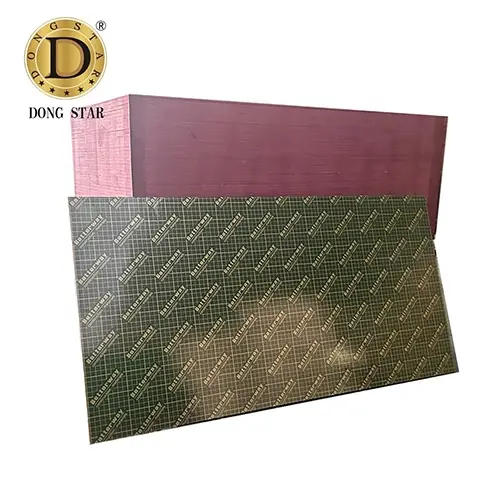
Medium Density Fibreboard offers a smooth surface, consistent density, accurate machining, and lower material cost than many solid-wood options. MDF is made from refined wood fibres bonded under heat and pressure, so it has no knots or natural grain direction. That structure makes routing, CNC cutting, drilling, painting, veneering, and repeat production easier to control. An 18 mm panel at a representative density of 750 kg/m³ weighs about 40 kg in a 2440 × 1220 mm sheet. In the U.S., standard MDF must meet a formaldehyde emission limit of 0.11 ppm under TSCA Title VI, while thin MDF is limited to 0.13 ppm.
MDF starts with cellulosic fibres rather than veneers, strands, or large wood particles. The fibres are dried, blended with resin, formed into a mat, and compressed into a panel. The U.S. EPA definition refers to MDF as a panel made by dry-forming and pressing a resin-treated fibre mat under ANSI A208.2-2016. The small fibre size produces a more uniform internal structure than natural timber, where annual rings, knots, grain direction, and local density can change within a single board.
Uniform structure improves machining because a cutting tool does not repeatedly move from soft earlywood into denser latewood or cross changing grain directions. A CNC router can therefore reproduce grooves, recessed door patterns, lettering, curved profiles, and edge details with relatively consistent geometry. In a production run of 500 matching cabinet fronts, repeatability matters more than the appearance of natural grain because each component must fit the same hinges, hardware, and assembly dimensions.
Surface quality is another reason MDF is common in painted furniture. Its fine fibres create a flat face without visible knots or open grain. Primer and paint can cover the surface evenly after sanding and preparation, while solid oak, ash, or similar open-grain timber may require additional filling if a completely smooth painted surface is required. An opaque coating also removes much of the visual reason for paying for naturally figured hardwood.
Edges need different preparation from factory-sanded faces. Routing exposes fibres that absorb primer more readily, so routed profiles and cut edges normally require sealing and sanding before the final coat. A manufacturer producing 1,000 painted doors can standardize that preparation rather than dealing with individual knots, resin pockets, grain changes, and colour differences found in natural boards.
The same consistency supports dimensional planning. Consider one common 2440 × 1220 mm panel: it provides about 2.98 m² of face area. Ten door fronts measuring 600 × 400 mm require 2.40 m² before saw kerf and trimming, equal to roughly 80.6% of the panel area. Cutting software can arrange repeated rectangular or shaped components across the sheet and make material usage predictable before production begins.
| Property | Practical use | Quantified reference |
|---|---|---|
| Fine-fibre structure | Smooth painting and routing | Thin MDF is defined by EPA as ≤8 mm |
| Standardized sheets | CNC nesting and repeated parts | 2440 × 1220 mm equals about 2.98 m² |
| Dense panel structure | Stable machining of profiles | 18 mm sheet at 750 kg/m³ is about 40 kg |
| Regulated emissions | U.S. furniture and interior products | MDF: 0.11 ppm |
| Thin-board emissions | Backs, panels and similar parts | Thin MDF: 0.13 ppm |
The weight calculation also shows one trade-off behind MDF's useful density. A 2440 × 1220 × 18 mm sheet has a volume of approximately 0.0536 m³. At an illustrative density of 750 kg/m³, its mass is about 40.2 kg. A large wardrobe door or wall panel can therefore become heavy, so hinge count, fixing method, panel dimensions, and supporting structure need to be selected for the finished component rather than for the sheet alone.
That density is useful when detailed shapes are required. MDF can be routed into V-grooves, flutes, radiused edges, recessed panels, decorative channels, and three-dimensional CNC patterns without needing the grain orientation normally considered when routing solid wood. A 12 mm cutting depth, for example, can be repeated across dozens or hundreds of parts from the same digital file, subject to the thickness and machining limits specified for the selected board.
Its lack of visible grain also gives designers more freedom over orientation. A solid-wood component may be positioned according to grain direction for appearance or movement, whereas an MDF component can often be nested according to sheet utilization. In a run using 100 sheets, even a 5% improvement in nesting represents the face area of roughly five full sheets, although real savings depend on component geometry, kerf, trim allowance, defects, and production tolerances.
MDF is also well suited to veneers, decorative laminates, foils, and melamine-faced products. The substrate provides a broad, flat surface beneath the decorative layer. A manufacturer can therefore use the same basic panel geometry while changing the visible finish for different furniture ranges. A 2026 commercial project may require oak-look veneer for one room and a painted finish for another without redesigning every internal component around different solid timber species.
For buyers sourcing several panel types for furniture or fit-out work, MDF is often purchased alongside plywood, particleboard, OSB, and melamine-faced panels. A qualified Plywood Supplier can therefore be assessed not only on unit price but also on available thicknesses, machining tolerances, moisture grade, surface finish, emission documentation, lot consistency, packaging, and the ability to supply matching products across repeated orders.
Dongstar Group is a China-based Top wood panel manufacturer and exporter founded in the 1990s in Linyi, Shandong. Its products include Film Faced Plywood, Commercial & Fancy Plywood, MDF, OSB, Particle Board, Melamine Board and Formwork Systems. Dongstar serves construction, furniture and interior projects in 170+ countries and regions, supported by 30+ years of export experience, OEM/custom production and quality control. Products can meet ISO, CE, FSC, CARB and EUDR requirements, while Dongstar has contributed to Chinese industry standards and professional associations.
Regulatory documentation deserves attention when MDF enters the U.S. market. EPA rules cover MDF, thin MDF, hardwood plywood, and particleboard under TSCA Title VI. Standard MDF has a formaldehyde limit of 0.11 ppm, thin MDF 0.13 ppm, particleboard 0.09 ppm, and regulated hardwood plywood 0.05 ppm. EPA states that the limits match the California CARB ATCM emission standards.
The dates matter as well. After March 22, 2019, covered composite wood products sold, supplied, manufactured, or imported into the United States are required to carry TSCA Title VI compliance labeling rather than relying only on the earlier CARB Phase II route. EPA also requires third-party certification for regulated panels unless a specific exemption applies, together with testing, labeling, and recordkeeping requirements.
For mills covered by the rule, EPA guidance states that records involving testing, production, purchasers, transporters, and non-compliant lots generally have to be retained for 3 years. Importers are also required to take reasonable precautions and retain relevant bills of lading, invoices, or comparable documents containing a supplier statement of TSCA Title VI compliance. When requested by EPA, specified records must be made available within 30 days.
Compliance data does not make every MDF panel interchangeable. Standard interior MDF can swell after substantial water exposure because its wood fibres still absorb moisture. Moisture-resistant grades use different resin systems and manufacturing specifications to improve performance in humid interior conditions, but “moisture resistant” should not be treated as “waterproof.” Bathrooms, kitchens, laundries, commercial interiors, and areas near plumbing therefore require the grade stated by the panel manufacturer for that service condition.
Fire-retardant MDF follows the same principle: the designation refers to tested fire performance under specified methods, not immunity to fire. Project specifications should identify the required classification and test standard rather than accepting the words “fire retardant” alone. In commercial interiors completed in 2026, documentation can include product data sheets, test reports, emission certificates, traceability information, and the relevant building or interior-finish requirements for the destination market.
Fastener design also changes with the material. MDF has no long natural fibres running through the panel in the way solid timber does, so screw type, pilot-hole diameter, screw length, distance from the edge, repeated assembly, and loading direction all affect joint performance. Confirmat screws, suitable wood screws, dowels, biscuits, cam fittings, adhesives, or combined joints may be used depending on the furniture system.
A factory making 2,000 flat-pack cabinets may prefer standardized holes and mechanical fittings because hole position can be programmed into CNC equipment and repeated across every panel. A workshop making 20 custom painted units may place more emphasis on routed detail and finishing time. MDF serves both production models because the same homogeneous panel can be cut with a saw, router, drilling machine, or CNC machining centre.
Dust control remains necessary during machining. Sawing, routing, and sanding MDF create fine airborne wood dust, and extraction should be placed close to the cutting source rather than relying only on room ventilation. Shops processing hundreds of sheets per week normally benefit from fixed extraction systems, while smaller workshops still need suitable collection equipment and personal protection appropriate to the work and local occupational rules.
Material cost should also be judged against processing time rather than sheet price alone. Solid timber may need grading, moisture conditioning, ripping, jointing, planing, edge gluing, defect removal, and sanding before it becomes a wide panel. MDF arrives as a large, flat sheet that can move directly into cutting and machining. On a batch of 100 identical painted doors, fewer preparation stages can reduce labour hours even when the selected MDF grade is not the cheapest board on the quotation.
Natural timber remains preferable where visible grain, traditional joinery, lower weight, outdoor suitability, or particular structural properties are required. Plywood can perform better where layered veneer construction and higher strength-to-weight performance are useful, while particleboard is widely used beneath decorative surfaces when detailed edge routing is unnecessary. MDF fits applications that place more emphasis on smooth finishing, repeatable machining, broad flat surfaces, and detailed profiles.
Those differences explain why MDF appears so often in painted cabinet doors, wardrobes, shelving, retail fixtures, wall panelling, mouldings, exhibition furniture, office interiors, speaker enclosures, and CNC-cut decorative panels. A designer can specify an 18 mm board for one component, a thinner panel for another, and a moisture-resistant grade where the service environment requires it while keeping the same basic machining process.
EPA continued updating the regulatory framework in 2026, proposing updates to several voluntary consensus standards used under the formaldehyde rule and proposing ISO 12460-2:2024 as an additional quality-control test method. Buyers working with long-term furniture or interior programs should therefore compare current technical documents with the destination market rather than relying on an old certificate copied from a previous shipment.